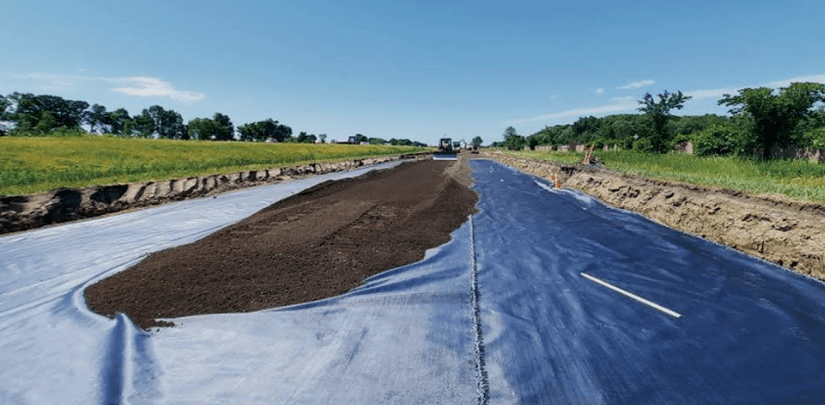
Road construction and maintenance projects increasingly incorporate geogrid fabric for roads as a foundational element supporting improved pavement durability, addressing subsurface conditions that would otherwise contribute to premature road deterioration.
The Underlying Challenge Road Construction Faces
Roads experience repeated, significant loading from vehicle traffic, and without adequate subsurface support, this ongoing stress gradually leads to rutting, cracking, and general pavement deterioration that requires costly, disruptive maintenance and repair over the road’s operational life.
How Geogrid Reinforcement Addresses This Challenge
Geogrid fabric for roads works by creating a reinforced base layer beneath the pavement surface, distributing traffic loads more evenly and reducing the differential settlement and base movement that contributes significantly to premature pavement failure without this additional support.
Applications Across Different Road Types
From high-traffic highways to lower-volume rural roads, geogrid reinforcement finds application across a broad range of road construction and rehabilitation projects, with specific product selection and installation approach varying based on the particular traffic loads and soil conditions each project presents.
Extending Pavement Service Life
Properly implemented geogrid reinforcement can meaningfully extend a road’s service life before major rehabilitation becomes necessary, offering genuine long-term value through reduced maintenance frequency and associated disruption compared to unreinforced pavement construction.
Integration With Overall Pavement Design
Geogrid fabric for roads typically works alongside other pavement design elements, including appropriate base material selection and proper compaction, making it worth considering as one component within comprehensive road engineering rather than a standalone solution addressing every pavement performance factor.
Transportation engineers and contractors researching this application can find detailed technical guidance through this resource on geogrid fabric for roads reinforcement applications.
Cost-Benefit Considerations for Road Projects
While geogrid reinforcement adds upfront construction cost, comparing this investment against the long-term expense of more frequent pavement rehabilitation and the associated traffic disruption often reveals genuine value, particularly for roads facing challenging soil conditions or heavy traffic loads.
Installation Quality’s Impact on Performance
As with other geogrid applications, achieving the intended pavement performance benefit depends significantly on proper installation technique, including correct placement depth and adequate compaction, making installation quality genuinely important alongside appropriate product selection.
Final Thoughts
Geogrid fabric for roads offers genuine engineering value for transportation infrastructure projects, providing subsurface reinforcement that helps extend pavement service life and reduce long-term maintenance costs compared to unreinforced road construction.
See also: Understanding Premium News Placement Value
Frequently Asked Questions
Does every road project need geogrid reinforcement?
Not necessarily, this depends on specific soil conditions, traffic loads, and project budget considerations, making engineering assessment important for determining genuine need.
How much does geogrid reinforcement typically extend pavement service life?
This varies considerably by specific conditions and product selection, though well-implemented reinforcement often provides meaningful service life extension for appropriate applications.
Is geogrid reinforcement more valuable for high-traffic or low-traffic roads?
Both can benefit, though the specific value proposition and appropriate product selection often differ based on the particular traffic loads and soil conditions each road type typically faces.