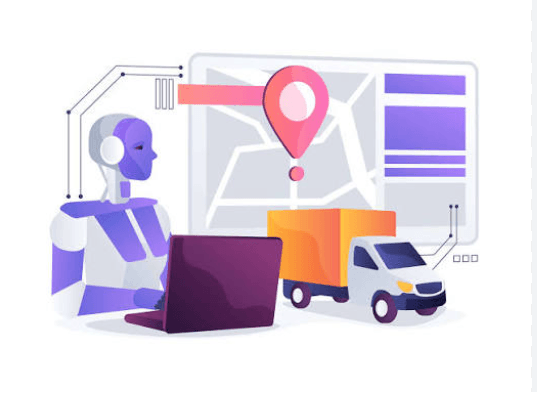
Getting an order from a warehouse shelf to a customer’s doorstep involves far more decisions than most shoppers ever see. A fulfillment team may need to choose a warehouse, confirm inventory, select a carrier, compare service levels, estimate delivery times, print the correct label, and respond to unexpected disruptions. When hundreds or thousands of orders are moving at once, even small inefficiencies can become expensive.
Artificial intelligence is giving businesses new ways to handle these decisions. Instead of relying entirely on fixed rules or employees manually comparing options, AI-powered shipping technology can evaluate large amounts of operational data and recommend an appropriate course of action in seconds. The result can be a fulfillment operation that reacts more quickly while making better use of the information already flowing through its systems.
Turning Shipping Data Into Useful Decisions
Modern fulfillment operations generate an enormous amount of data. Every shipment can produce information about package dimensions, weight, destination, carrier performance, transit time, shipping cost, delivery exceptions, and customer expectations. Warehouses also collect information about inventory availability, order volume, labor capacity, and processing times.
The challenge is turning all of that information into something useful while an order is actually being processed. Looking at historical reports after the fact may help a business understand what happened last month, but it does not necessarily help a warehouse associate decide how an order should ship right now.
AI can analyze historical and current information together. For example, a system may recognize that one carrier regularly experiences delays on a particular route while another has recently performed better. Instead of choosing a service based only on its advertised transit time, the fulfillment operation can incorporate actual performance into the decision.
Making Carrier Selection More Dynamic
Carrier selection has traditionally depended heavily on predefined business rules. A company might use Carrier A for packages below a certain weight, Carrier B for specific regions, and expedited service whenever an order needs to arrive within two days. Those rules are useful, but shipping conditions rarely remain perfectly consistent.
Carrier capacity changes. Weather affects transportation networks. Regional demand surges can create temporary delays. Rates and surcharges also influence which option makes the most financial sense for a particular shipment.
This is one area where shipping AI can help fulfillment teams compare cost, service level, historical reliability, destination, package characteristics, and delivery requirements before selecting a shipping option.
The difference is flexibility. Rather than assuming yesterday’s best option remains the best choice today, an intelligent system can continuously evaluate available information. A lower-cost service might be appropriate for an order with a flexible delivery window, while a more reliable carrier could be selected for an urgent shipment traveling through a region experiencing disruptions.
Improving Fulfillment Speed Without Rushing Decisions
Speed matters in fulfillment, but simply asking employees to work faster has obvious limits. People still need enough time to make accurate decisions, and rushing repetitive tasks can increase the likelihood of errors.
AI can improve speed by reducing the number of routine choices employees have to make manually. If software can quickly identify an appropriate carrier, service level, fulfillment location, or packaging option, employees can spend less time comparing screens and checking rules.
Consider an order that could ship from three distribution centers. Choosing the closest warehouse might seem obvious, yet distance alone does not tell the whole story. One location could be experiencing a backlog, another might have limited inventory, and the third may have access to a carrier service that reaches the customer sooner. AI-powered systems can weigh these variables together rather than treating each one as a separate decision.
That becomes especially valuable during busy periods. Holiday peaks, promotions, product launches, and unexpected demand spikes can create conditions where yesterday’s fulfillment strategy suddenly becomes inefficient.
Responding Faster When Conditions Change
Fulfillment does not happen in a controlled environment. Severe weather can close transportation hubs. Carrier networks can become overloaded. Inventory counts may change unexpectedly. A warehouse can experience equipment problems or a sudden surge in orders.
The value of AI becomes particularly noticeable when conditions change quickly. Instead of waiting for employees to discover a problem and manually determine which shipments are affected, intelligent systems can identify patterns and flag orders that may require attention.
Suppose a carrier develops a significant delay in one region. An AI-assisted shipping platform could use recent performance data to reconsider carrier choices for orders that have not yet left the warehouse. Depending on how the system is configured, it might recommend alternative services or route high-priority orders differently.
Humans still play an important role here. AI recommendations work best when businesses establish clear operating rules, review unusual situations, and monitor whether automated decisions continue to support their goals.
Building a Smarter Fulfillment Operation
Faster fulfillment decisions do not come from speed alone. They come from having better information available at the moment a decision needs to be made. That is where AI can be particularly useful.
By analyzing carrier performance, shipping costs, inventory positions, delivery requirements, warehouse conditions, and historical outcomes, AI-powered systems can help businesses make more informed choices without adding another layer of manual work. Employees can focus their attention on exceptions and complex situations while routine decisions move through the fulfillment process more efficiently.
As shipping networks become more complicated, that ability to adapt may become just as important as automation itself. Businesses do not need every shipment to follow the same path. They need each order to follow a path that makes sense based on the conditions at that moment. With good data, thoughtful oversight, and clearly defined operational goals, AI can help fulfillment teams make those decisions faster and with greater confidence.