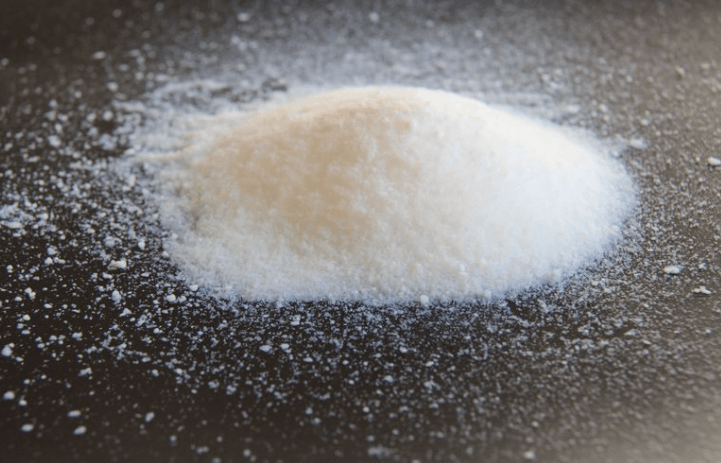
Textbook descriptions of fumed silica’s functional properties only tell part of the story. To truly appreciate how versatile this material is, it helps to look at how different industries have actually put fumed silica applications into practice, addressing real formulation challenges that would otherwise be difficult to solve with more conventional additives.
Industrial Coatings: Solving the Sag Problem
Coating manufacturers serving industrial and infrastructure markets have long struggled with a fundamental tension: coatings need to flow easily enough to apply smoothly, yet resist sagging once applied to vertical structures like bridges, tanks, and pipelines. Before effective thixotropic additives became widely available, achieving this balance often required compromising either application ease or finished film quality. Fumed silica’s introduction into industrial coating formulations provided a practical solution, enabling coatings that spray or brush on smoothly while still holding their position on vertical surfaces during the curing process.
This application has proven particularly valuable in protective coating systems for large infrastructure projects, where achieving consistent film thickness across complex geometries directly impacts long-term corrosion protection performance.
Adhesives and Sealants: Managing Gap-Filling Applications
Construction and industrial adhesive manufacturers have similarly benefited from incorporating fumed silica into their formulations, particularly for products designed to fill gaps or joints where the material must not slump or flow out of position before curing. This application demonstrates fumed silica’s value not just in thin-film coating applications, but also in thicker-bodied products where structural stability during application and cure is equally critical.
Silicone Rubber Manufacturing: Achieving Necessary Mechanical Properties
Within silicone rubber manufacturing, fumed silica applications extend well beyond simple rheology control into genuine mechanical reinforcement. Unfilled silicone rubber typically lacks the tensile strength and tear resistance needed for many practical applications, and fumed silica’s reinforcing capability has made it possible to produce silicone rubber products, from gaskets to electrical insulation components, that can withstand meaningful mechanical stress throughout extended service life.
Cosmetics: Balancing Sensory Experience with Product Stability
Cosmetic formulators have found fumed silica applications valuable for addressing the sometimes competing demands of product texture and long-term stability. In powder cosmetics, it helps prevent caking and improves the tactile sensory experience during application, while in liquid and cream formulations, it contributes to emulsion stability, helping prevent the separation of oil and water phases that could otherwise compromise product quality over its shelf life.
Power Infrastructure Protection
Perhaps less widely recognized outside specialized industrial circles, fumed silica applications within power system infrastructure protection have become increasingly important as utilities work to improve the reliability of outdoor electrical equipment. Hydrophobic fumed silica incorporated into insulator protective coatings contributes to reduced pollution flashover risk, addressing a genuine operational challenge that traditional maintenance approaches alone struggle to fully resolve.
A broader technical discussion exploring how these varied fumed silica applications relate to the material’s underlying functional properties is available in this resource on fumed silica applications across different industry contexts, which provides additional detail on formulation considerations relevant to each use case.
Advanced Ceramics: A Newer Frontier
More recently, fumed silica applications have expanded into advanced ceramics manufacturing, where its contribution to particle packing density and sintering behavior has opened possibilities for improved microstructural control in specialty ceramic products, including applications requiring enhanced optical transparency alongside traditional ceramic durability characteristics.
What These Diverse Applications Have in Common
Despite the apparent diversity of these use cases, spanning coatings, rubber, cosmetics, power infrastructure, and ceramics, each application ultimately relies on the same fundamental particle characteristics: high surface area, network-forming capability, and customizable surface chemistry. Recognizing this common thread helps formulators in one industry potentially draw insight from how fumed silica has been successfully applied in seemingly unrelated fields.
See also:Professional Fractional CMO: The Smart Growth Partner for Modern Businesses
Frequently Asked Questions
Do these different fumed silica applications require significantly different grades of the material? Yes, while the underlying particle characteristics remain similar, specific surface treatments and surface area specifications are often optimized for each application category, meaning grade selection should be tailored to the specific use case rather than assuming universal applicability.
Which industry represents the largest volume application for fumed silica? Coatings and sealants typically represent significant volume applications given the scale of these industries, though usage patterns can vary by region and market conditions.
Are there emerging applications for fumed silica beyond those discussed here? Yes, ongoing materials science research continues to identify new potential applications, particularly in advanced materials and specialty technical products where fumed silica’s unique particle characteristics offer solutions to specific formulation challenges.
Conclusion
Examining real-world fumed silica applications across such varied industries reveals just how fundamentally useful this material’s core particle characteristics are. From preventing coating sag on industrial infrastructure to reinforcing silicone rubber and supporting advanced ceramic development, fumed silica continues to demonstrate remarkable versatility in solving genuine formulation challenges across the industrial landscape